
Best
HIPAA compliance software is the layer that turns the HIPAA Security Rule from a PDF into a running program: it maps your safeguards to the rule, collects the evidence, tracks the risk analysis, and keeps everything audit-ready between reviews. This guide compares seven platforms that healthcare organisations and their business associates actually use in 2026. We looked at framework coverage, cross-framework reuse, data residency, pricing transparency, deployment speed, and evidence automation. Some tools are broad GRC platforms that treat HIPAA as one of many frameworks; one is a HIPAA specialist; one is built for EU health-tech selling into the US. Every entry below carries honest cons, including ours. Reviewed July 2026.
Quick answer
- Best overall for EU health-tech selling into the US: Venvera - EU-hosted HIPAA plus GDPR from one evidence library, published flat pricing.
- Best HIPAA specialist: Compliancy Group - HIPAA is its whole product, not one framework of many.
- Best for automation-first US teams: Vanta or Drata - deep integration libraries and continuous monitoring.
Why HIPAA is a live topic in 2026
HIPAA is not a new rule, but it is a moving one. In late 2025 the US Department of Health and Human Services (HHS) published a Notice of Proposed Rulemaking to strengthen the HIPAA Security Rule, signalling tighter expectations around risk analysis, encryption, and technical safeguards. Whether or not every proposal is finalised, the direction of travel is clear: regulators want documented, current, evidence-backed security programs rather than a policy binder that has not been touched since onboarding. At the same time, healthcare remains one of the most heavily targeted sectors for data breaches, and the Office for Civil Rights continues to investigate and settle enforcement cases. For any organisation that creates, receives, maintains, or transmits protected health information, that combination makes a maintainable, always-current HIPAA program a practical necessity rather than a once-a-year project. Software earns its place when it keeps the risk analysis, safeguards, and evidence continuously in sync.
How we picked
We scored each platform against six weighted criteria, then wrote the honest cons that a demo will not tell you.
- Framework coverage (25%) - depth of HIPAA Security and Privacy Rule support, not just a checkbox.
- Cross-framework crosswalk (20%) - does Security Rule work reuse into GDPR, ISO 27001, or SOC 2, or is it siloed.
- Data residency (15%) - where evidence and PHI-adjacent metadata are hosted, EU or US.
- Pricing transparency (15%) - is pricing published and flat, or quote-only.
- Deployment speed (15%) - time from signup to a defensible first draft of the program.
- Evidence automation (10%) - integrations and continuous monitoring that collect evidence for you.
"Verified" means we confirmed the fact in vendor documentation or in the product we operate; "vendor-stated" means the vendor claims it and we did not independently test it. Facts checked 20 July 2026.
HIPAA compliance software at a glance
| Platform | Best for | Data residency | Pricing |
|---|---|---|---|
| Venvera | EU health-tech, HIPAA plus GDPR | EU | From EUR 399/mo |
| Vanta | Automation-first US teams | US | Not public |
| Drata | Continuous control monitoring | US | Not public |
| Compliancy Group | HIPAA specialists | US | Not public |
| Secureframe | Multi-framework GRC | US | Not public |
| Sprinto | Startups, multi-framework | US | Not public |
| Scytale | Multi-framework automation | US | Not public |
1. Venvera
Overview
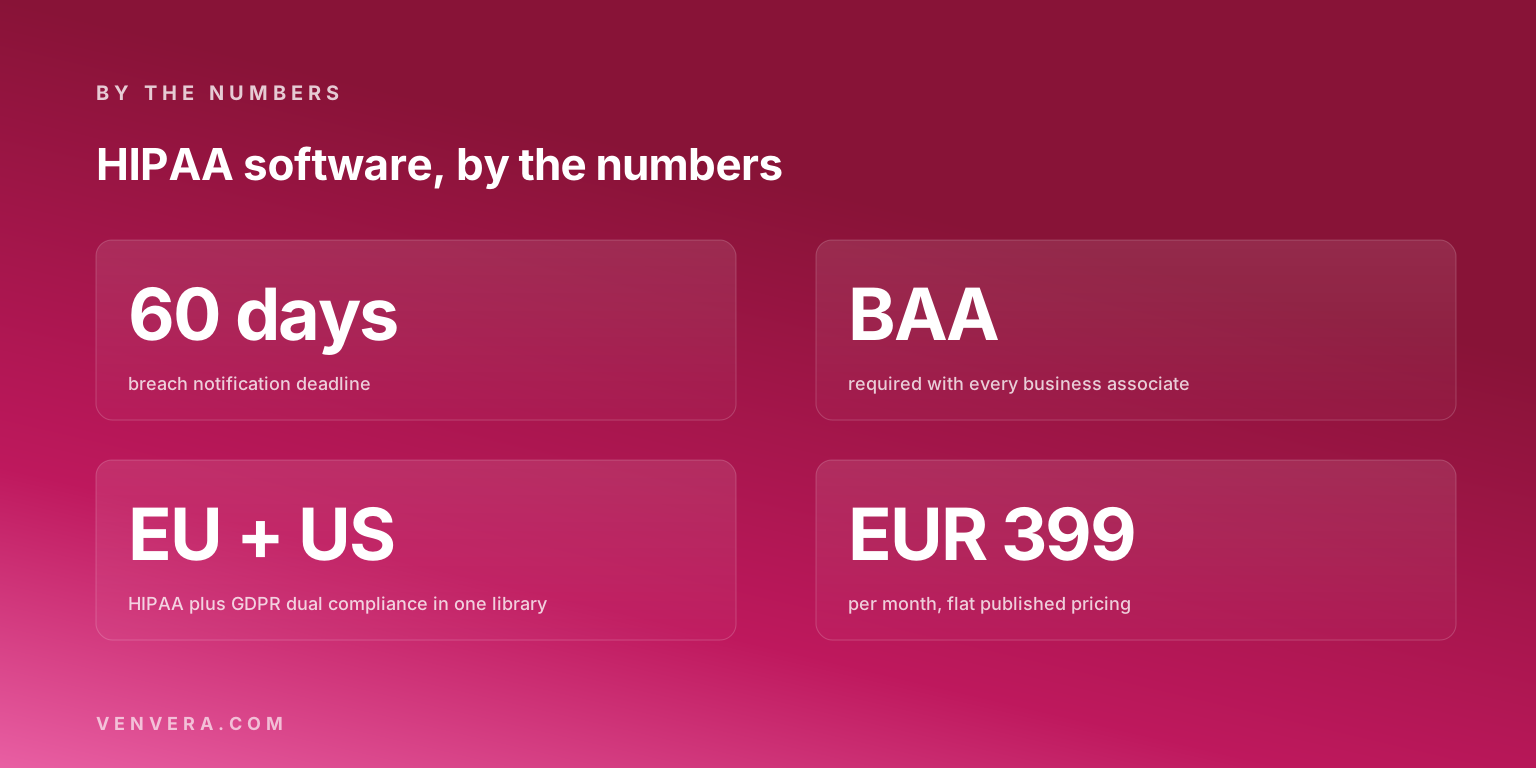
Venvera is an EU-hosted compliance-governance platform built for organisations that have to satisfy more than one regulator at once. For HIPAA specifically, its differentiator is dual compliance: you build the HIPAA Security Rule program once, and the same evidence library and control set feed GDPR, ISO 27001, and SOC 2 through a crosswalk, so the Security Rule work is not stranded in a HIPAA-only silo. This matters for a specific and under-served buyer: European health-tech companies that process EU patient data under GDPR and also act as business associates for US healthcare customers. HIPAA binds business associates regardless of where they are located, so an EU vendor serving US healthcare is squarely in scope. Running both regimes from one place, on EU infrastructure, is where Venvera fits.
Strengths
- Verified: EU data residency by default, a deliberate stance for teams that cannot or will not host evidence in the US.
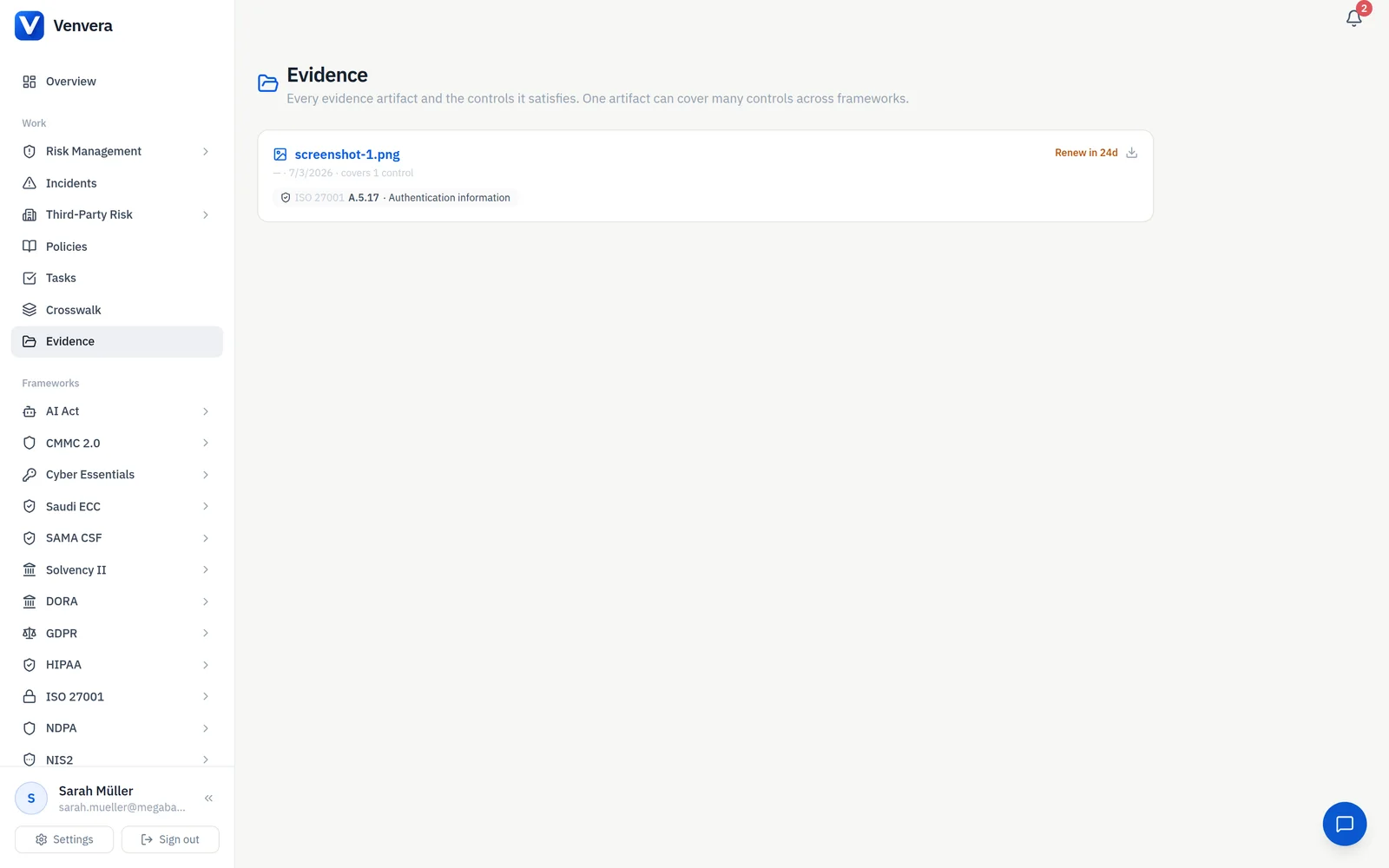
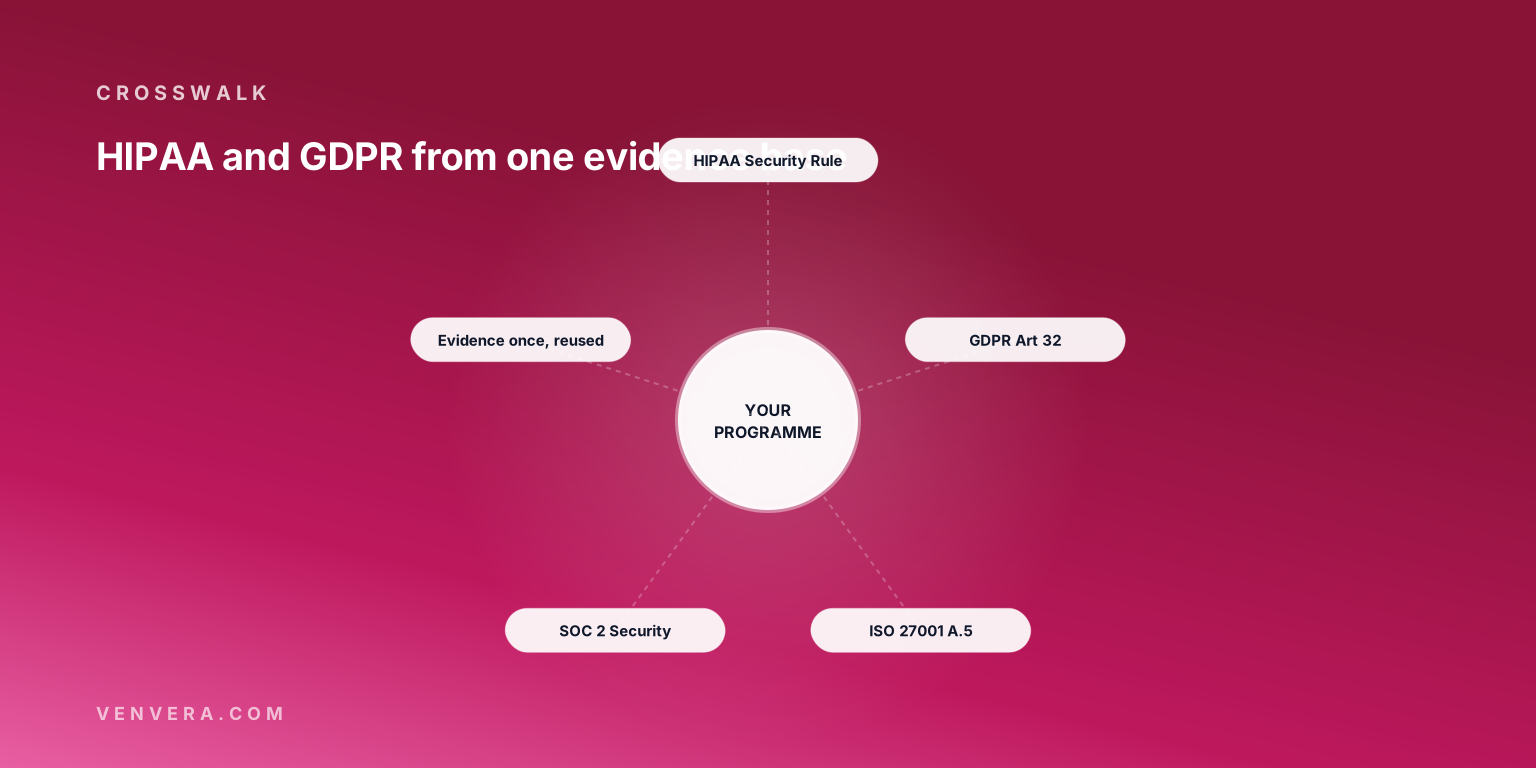
- Verified: HIPAA plus GDPR from a single evidence library, so a control tested once counts across both regimes.
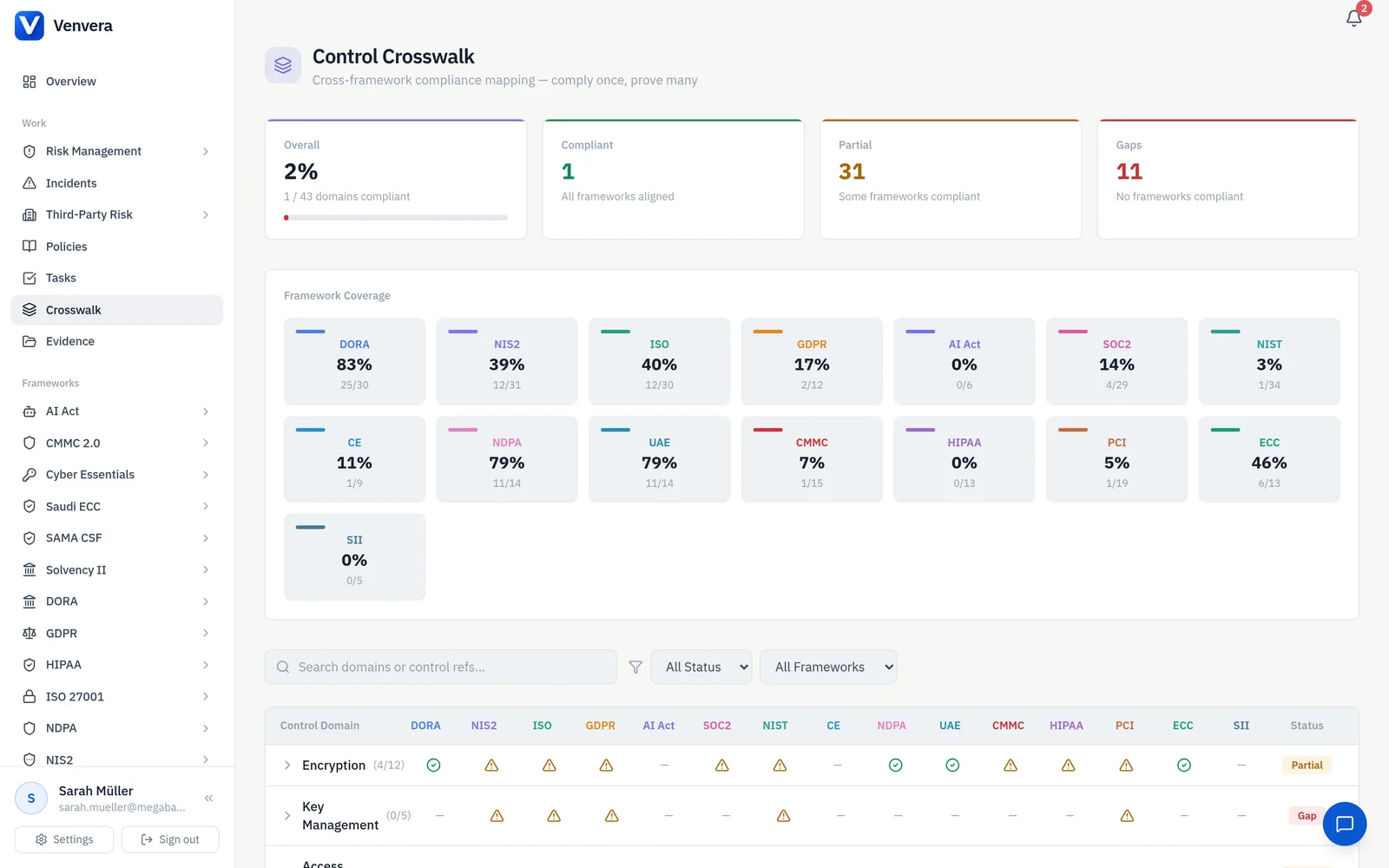
- Verified: a crosswalk that reuses Security Rule safeguards into GDPR, ISO 27001, and SOC 2 instead of duplicating the work per framework.
- Verified: published, flat pricing with no per-user fees, so the cost is knowable before a sales call.
Cons
- Smaller and younger than the US incumbents, with less brand recognition in North America.
- A narrower integration catalogue than the automation-first platforms.
- No automation-first SOC 2 monitoring engine of the kind Vanta or Drata are built around.
- No US-hosted option; the EU-residency stance is deliberate, but some US-only buyers will not want it.
Pricing
From EUR 399/month (Basic), EUR 899/month (Professional); published, flat, no per-user fees.
Best for
EU health-tech companies that need HIPAA and GDPR at the same time, on EU infrastructure, with pricing they can see up front.
2. Vanta
Overview
Vanta is one of the best-known automation-first compliance platforms. Its centre of gravity is SOC 2 and ISO 27001, and it supports HIPAA alongside a large library of integrations that pull evidence automatically from cloud infrastructure, identity providers, and other tools. For US teams that want continuous monitoring and a mature ecosystem, it is a strong default.
Strengths
- Verified: a large integration library that automates evidence collection across common cloud stacks.
- Vendor-stated: HIPAA support alongside SOC 2 and ISO 27001 in one platform.
- Verified: strong brand recognition and a mature partner ecosystem in the US market.
Cons
- SOC 2-first by design, so HIPAA is supported broadly rather than as a specialism.
- US-based, which matters for buyers with EU data-residency requirements.
Pricing
Not public. Vanta does not publish standard pricing; expect a sales-led quote.
Best for
US SaaS teams that lead with SOC 2 or ISO 27001 and want HIPAA folded into the same automation-first workflow.
3. Drata
Overview
Drata is an automation-first GRC platform whose signature is continuous control monitoring: it watches your controls against evidence and flags drift as it happens. It supports HIPAA among its frameworks, and its strength is keeping a program continuously audit-ready rather than reconstructing evidence at review time.
Strengths
- Verified: continuous control monitoring that surfaces drift between reviews.
- Vendor-stated: HIPAA support within a multi-framework GRC platform.
- Verified: a broad integration set aimed at automated evidence collection.
Cons
- Its centre of gravity is audit automation, so HIPAA-specific depth is not the headline.
- US-hosted, which is a constraint for EU-residency buyers.
Pricing
Not public. Drata is quote-only; no standard pricing is published.
Best for
US teams that value continuous monitoring and want HIPAA managed alongside other frameworks in one control plane.
4. Compliancy Group
Overview
Compliancy Group is the HIPAA specialist on this list, and that is a genuine strength. HIPAA is its whole product, not one framework among many, so its workflows, coaching, and templates are shaped end to end around the Security, Privacy, and Breach Notification Rules. For a US healthcare organisation whose only real obligation is HIPAA, a purpose-built tool can be more direct than a broad GRC platform.
Strengths
- Verified: HIPAA-first design, with the whole product built around the HIPAA rules rather than adapted from a general framework.
- Vendor-stated: guided workflows and support oriented specifically to HIPAA obligations.
- Verified: clear focus for organisations that only need HIPAA and nothing else.
Cons
- Single-framework, so there is no crosswalk to reuse the work across GDPR, ISO 27001, or SOC 2.
- US-focused, which is a limitation for organisations with EU obligations.
Pricing
Not public. Pricing is quote-based and not published on the site.
Best for
US healthcare providers and business associates whose compliance scope begins and ends with HIPAA.
5. Secureframe
Overview
Secureframe is an automation-first, multi-framework GRC platform that supports HIPAA alongside SOC 2, ISO 27001, and others. Like its automation-first peers, it leans on integrations to gather evidence and keep controls monitored, and it targets teams that want several frameworks managed from one place.
Strengths
- Verified: multi-framework coverage with HIPAA supported alongside SOC 2 and ISO 27001.
- Vendor-stated: automated evidence collection through integrations.
- Verified: one console for teams juggling several frameworks at once.
Cons
- SOC 2 and ISO-first, so HIPAA is one of many rather than the specialism.
- US-hosted, a constraint for EU-residency requirements.
- Pricing is opaque and quote-only.
Pricing
Not public. Secureframe does not publish standard pricing.
Best for
US teams that want HIPAA handled inside a broader multi-framework GRC rollout.
6. Sprinto
Overview
Sprinto is an automation-first, multi-framework compliance platform that is popular with startups and includes HIPAA among its supported frameworks. It aims to get smaller teams to a defensible posture quickly, with automation doing much of the evidence work.
Strengths
- Verified: multi-framework automation with HIPAA included in the set.
- Vendor-stated: a fast, startup-friendly path to an initial compliant posture.
- Verified: popularity with early-stage teams that want breadth quickly.
Cons
- Breadth over HIPAA depth; HIPAA is one framework among several rather than a specialism.
- Pricing is opaque and quote-only.
Pricing
Not public. Sprinto does not publish standard pricing.
Best for
Startups that want several frameworks including HIPAA stood up quickly with heavy automation.
7. Scytale
Overview
Scytale is a multi-framework compliance automation platform that includes HIPAA among its supported frameworks. It sits in the general-GRC category, helping teams manage several standards from one place with automation reducing the manual evidence burden.
Strengths
- Verified: multi-framework automation with HIPAA in the supported set.
- Vendor-stated: automation to reduce the manual evidence workload.
- Verified: a single platform for teams managing several standards.
Cons
- General GRC, so HIPAA is one of several frameworks rather than the focus.
- Pricing is not published.
Pricing
Not public. Scytale does not publish standard pricing.
Best for
Teams that want HIPAA managed as part of a broader multi-framework automation setup.
How to choose HIPAA compliance software
The right tool depends less on feature lists and more on your obligations and where your data has to live. Match the platform to your situation.
If you are a US healthcare provider whose only obligation is HIPAA
Prioritise HIPAA depth and guided workflows, because a specialist tool built end to end around the Security, Privacy, and Breach Notification Rules will move you faster than a broad platform where HIPAA is one option among many. A HIPAA-specialist product like Compliancy Group is designed for exactly this case.
If you are a US SaaS team carrying several frameworks
Prioritise evidence automation and integration breadth, because your bottleneck is collecting and maintaining evidence across SOC 2, ISO 27001, and HIPAA at once. Automation-first platforms such as Vanta, Drata, Secureframe, Sprinto, and Scytale are built around that continuous-monitoring model.
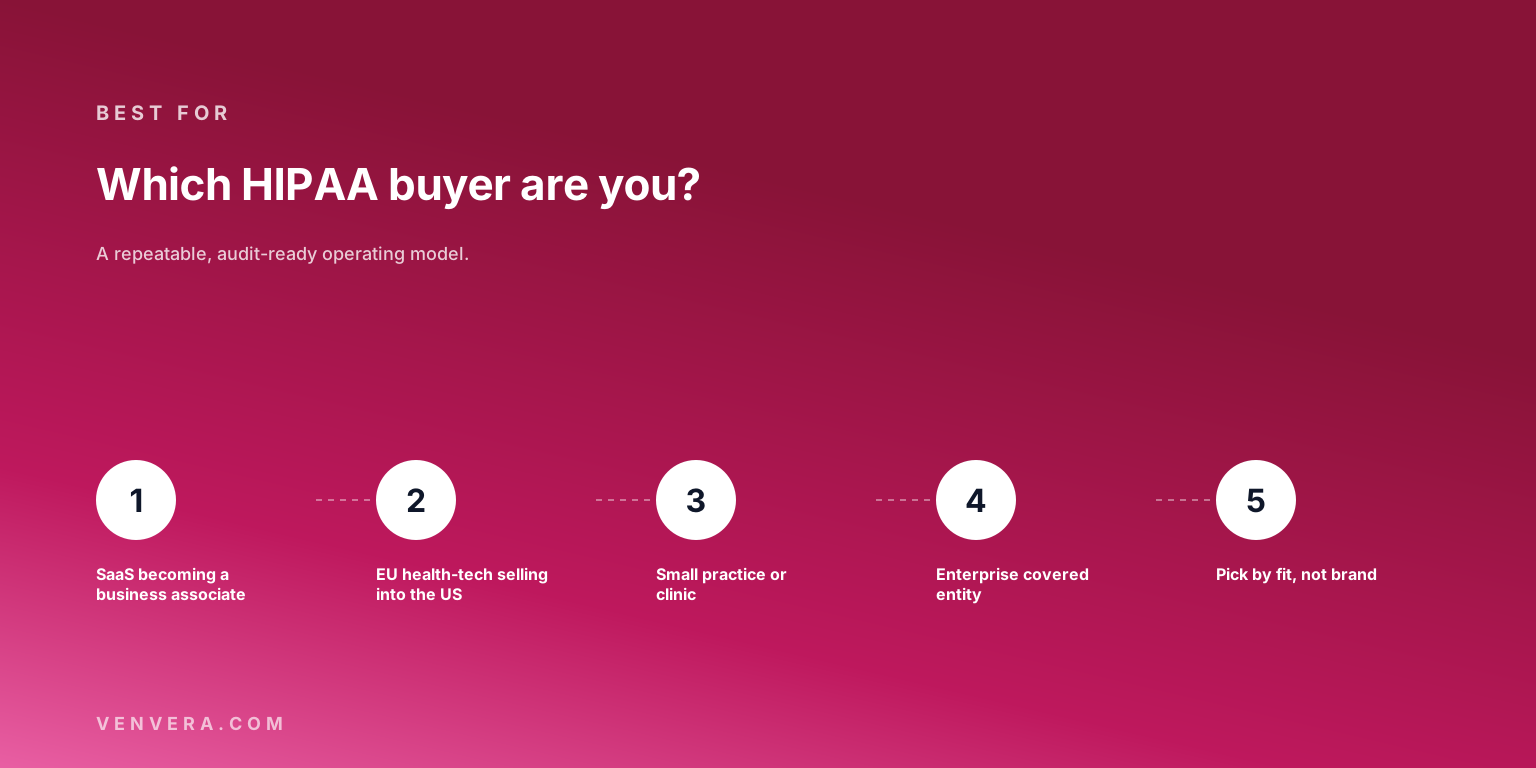
If you are EU health-tech selling into the US
Prioritise data residency and cross-framework reuse, because you are in scope for HIPAA as a business associate while still owing GDPR on EU patient data. HIPAA binds business associates regardless of location, so the dual burden is real, and this HIPAA plus GDPR combination is genuinely under-served. Running both from one EU-hosted evidence library, as Venvera does, avoids maintaining two disconnected programs. Note that EU hosting is a residency preference, not a HIPAA requirement; HIPAA itself does not mandate where data lives.
The specialist-versus-broad-GRC distinction
A HIPAA specialist gives you depth and a shorter path when HIPAA is your whole world. A broad GRC platform gives you reuse and one console when HIPAA is one of several obligations. Neither is better in the abstract; the tie-breaker is how many frameworks you carry and where your evidence has to be hosted.
Frequently Asked Questions
How much does HIPAA compliance software cost?
It varies widely, and most vendors do not publish pricing. Among the platforms here, only Venvera lists standard pricing: from EUR 399/month (Basic) and EUR 899/month (Professional), flat, with no per-user fees. Every competitor in this guide is quote-only, so you will need a sales call to get a number, and the total often depends on company size, frameworks, and integrations.
Do I need software or a consultant for HIPAA?
They solve different problems, and many organisations use both. A consultant brings judgement, interprets your specific risk analysis, and can advise on edge cases; software keeps the program current, collects evidence continuously, and gives you a defensible record between reviews. Software does not replace the professional judgement in a risk analysis, and a consultant alone does not keep your evidence audit-ready day to day.
Is there an official HIPAA certification?
No. Unlike SOC 2 reports or ISO 27001 certificates, HIPAA has no government-issued certification. The regulator, HHS, does not certify organisations as HIPAA compliant. Software and third parties can attest to your readiness or help you demonstrate compliance, but no vendor can grant an official HIPAA certificate, and any that claims to should be treated with caution.
Does HIPAA apply to companies outside the US?
Yes, when they act as business associates. HIPAA binds covered entities and their business associates regardless of where they are located, so a non-US company that creates, receives, maintains, or transmits protected health information on behalf of a US healthcare organisation is in scope. This is why EU health-tech vendors selling into the US often need HIPAA and GDPR at the same time.
Can one platform cover HIPAA and GDPR together?
Yes. Many controls overlap, so a platform with a crosswalk lets you test a safeguard once and reuse the evidence across both regimes. Venvera is built around this reuse and hosts the evidence in the EU; broad GRC platforms can also cover both, though most are US-hosted, which matters if EU data residency is a requirement for you.
What does the 2025 HIPAA Security Rule proposal change?
In late 2025 HHS proposed strengthening the Security Rule with tighter expectations around risk analysis, encryption, and technical safeguards. The proposals were not all finalised at the time of writing, so treat specifics as provisional and check the HHS source directly. The broad signal is that regulators want current, documented, evidence-backed programs rather than static policy binders.
Primary sources
- HHS.gov - the official HIPAA hub, covering the Privacy, Security, and Breach Notification Rules. HHS HIPAA.
- HHS.gov - the HIPAA Security Rule, the source for technical, physical, and administrative safeguards. Security Rule.
- 45 CFR Part 160 - general administrative requirements. eCFR Part 160.
- 45 CFR Part 164 - the Security and Privacy Rules in full. eCFR Part 164.
Method note. Competitor facts are from public vendor documentation as of 20 July 2026 and are classified verified or vendor-stated; pricing is marked "Not public" where a vendor does not publish it. Venvera facts are verified against the product.
Running HIPAA and GDPR at once?
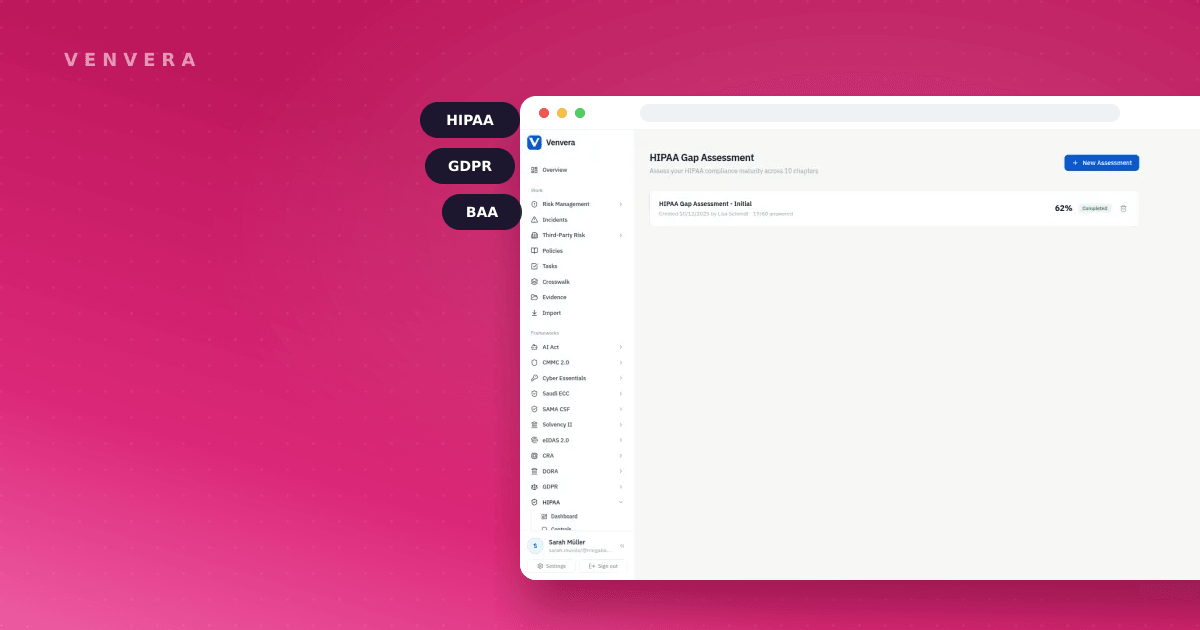
Venvera builds your HIPAA Security Rule program once and reuses the evidence across GDPR, ISO 27001, and SOC 2, all on EU infrastructure with flat pricing from EUR 399/month. See the HIPAA module for how the crosswalk and evidence library work together.
By Alexander Sverdlov, CEO and Founder, Venvera. Published 20 July 2026 - Last reviewed 20 July 2026.