Best
If you are looking for a Vanta alternative for NIS2, you have probably already worked out that NIS2 is not another SOC 2. It is Directive (EU) 2022/2555, a piece of EU law that each of the 27 Member States turns into its own national statute, with a management-body accountability regime, a hard incident-reporting clock, and supervisory authorities that can fine you or hold your directors personally liable. Tooling that was designed to automate SOC 2 evidence gets you part of the way and then stops at the parts NIS2 cares about most. This guide is for the CISO, the head of compliance, or the risk manager who has to close that gap and wants to know, honestly, whether Vanta does it, whether Venvera does it better for their situation, and how to run the program either way.
Everything below is classified by how it was verified: verified (confirmed in the vendor's own documentation or in a product we operate), vendor-stated (claimed by the vendor, not independently confirmed), or flagged where it could not be confirmed. Vanta's capabilities are quoted from vanta.com as of 20 July 2026; re-check before you rely on any single line, because both products move fast.
Short answer
- Vanta is a strong fit if you already run SOC 2 or ISO 27001 on Vanta, want NIS2 mapped onto that work, and value a large integration library and continuous monitoring above EU-specific depth.
- Venvera is the better fit if NIS2 is the point, not a by-product: you want native NIS2 controls, the Article 23 clock as a live workflow, management-body accountability and training tracked, per-country transposition, and evidence reused across DORA and ISO 27001, at published EU-hosted pricing.
- Either way, the work is the same shape. The last section is a practical NIS2 program you can run with whichever tool you pick.
What NIS2 actually asks of your software
Before comparing tools, be clear about what the job is. NIS2 loads five obligations onto a covered entity, and each one has a software footprint.
1. The ten Article 21 measures
Article 21(2) sets a minimum of ten risk-management measures every essential and important entity must implement: risk analysis and information-security policies; incident handling; business continuity and crisis management; supply-chain security; security in acquisition, development and maintenance including vulnerability handling; policies to assess the effectiveness of the measures; basic cyber hygiene and training; cryptography and encryption; human-resources security, access control and asset management; and multi-factor authentication and secured communications. Your software has to turn each of these into an owned, evidenced, reviewable control, not a slide.
2. The Article 23 incident-reporting clock
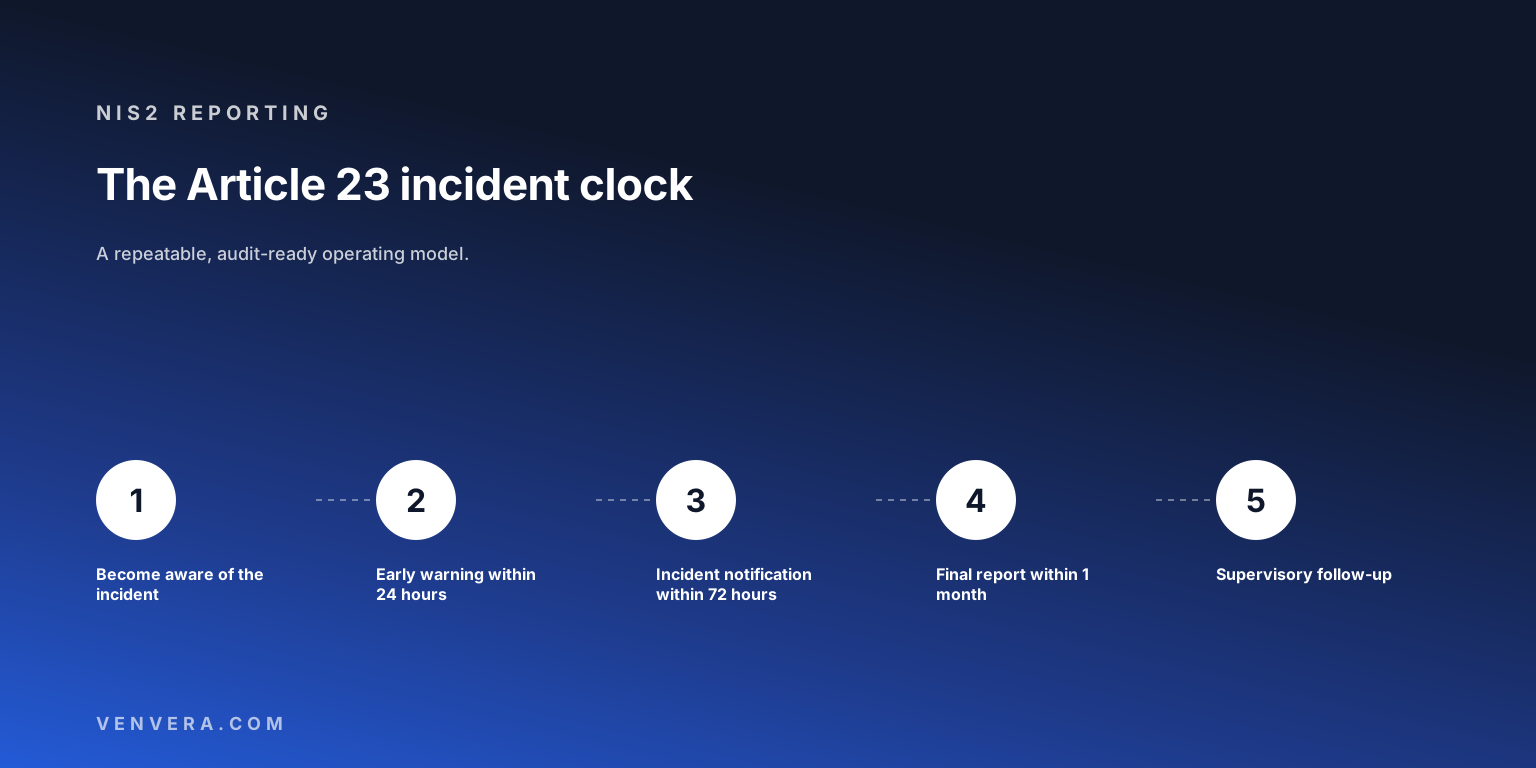
This is the obligation that catches people out. For a significant incident, Article 23 requires an early warning within 24 hours of becoming aware, an incident notification within 72 hours, and a final report within one month, filed to your national CSIRT or competent authority. That is a live clock with three stages, not a checkbox, and the tool has to run it as one.
3. Management-body accountability (Article 20)
NIS2 pushes accountability to the top. Under Article 20, the management body must approve the cybersecurity risk-management measures, oversee their implementation, and follow training, and members can be held liable for failures. Software that ignores this leaves the single most-tested governance obligation undocumented. You need to evidence that the board approved the measures and that named people did the training.
4. Scope: essential vs important, and your role
NIS2 splits entities into essential (Annex I sectors such as energy, transport, banking, health, digital infrastructure and public administration) and important (Annex II sectors such as postal, waste, chemicals, food, manufacturing and digital providers), generally from the medium-enterprise size threshold up. Essential entities face proactive supervision; important entities face reactive supervision. Getting your classification wrong changes what a supervisor expects, so the tool should scope your role explicitly rather than treat NIS2 as one flat checklist.
5. Twenty-seven national laws, not one rulebook
This is the part that pure control-mapping tools underplay. NIS2 is a Directive, so it does not apply directly. Each Member State transposes it into national law, with its own registration portal, its own competent authority, and its own deadlines. Germany's NIS2UmsuCG, for example, carries its own registration and BSI obligations. A multinational is not doing NIS2 once; it is doing it per country. Tooling that only knows the Directive misses where the real filing happens.
What Vanta does for NIS2, honestly
Vanta is a serious platform and its NIS2 offering is real. From its own documentation (verified on vanta.com, 20 July 2026), Vanta provides pre-built controls mapped to NIS2, automated tests that monitor controls hourly across more than 400 integrations, continuous evidence collection, third-party and supply-chain risk automation, and AI features that draft policies and suggest remediation. Its stated approach is to reuse existing work: Vanta maps ISO 27001 controls to NIS2 (it cites roughly 40% overlap with ISO 27001 and NIST CSF), so a team already certified on Vanta can extend into NIS2 quickly.
If your priority is automation-first monitoring and you live inside a large cloud and SaaS estate that Vanta already integrates with, that is genuinely valuable, and no honest comparison should pretend otherwise. Vanta's integration breadth and continuous testing are ahead of most of the market, Venvera included.
Where the ISO-mapping approach leaves NIS2 gaps
The strength is also the limit. When NIS2 is a mapping layer on top of an ISO 27001 engine, four things that NIS2 supervisors actually test tend to be thin. These are the gaps a Vanta alternative for NIS2 has to close, and Vanta's own NIS2 page does not claim to address the first two.
- Per-country transposition. A 40% ISO overlap says nothing about which national authority you register with or which national deadline binds you. NIS2 is filed nationally; a Directive-level mapping does not tell a German entity about BSI registration or a French entity about ANSSI.
- The Article 23 clock as a governed workflow. Monitoring that a control is green is not the same as running a 24h / 72h / 1-month reporting process to a named CSIRT, with the early warning, the notification and the final report as distinct, evidenced stages.
- Management-body accountability and training (Article 20). Board approval of the measures and named-person training are governance artefacts, not integration tests. They need to be captured as evidence a supervisor can inspect.
- Sector and essential-vs-important nuance. A flat NIS2 control set does not reflect that an essential energy operator and an important food manufacturer face different supervision.
None of this makes Vanta a bad tool. It makes it a tool built for a different centre of gravity, audit automation, with NIS2 mapped on. If NIS2 is your actual obligation, you want the centre of gravity to be the Directive.
How Venvera approaches NIS2
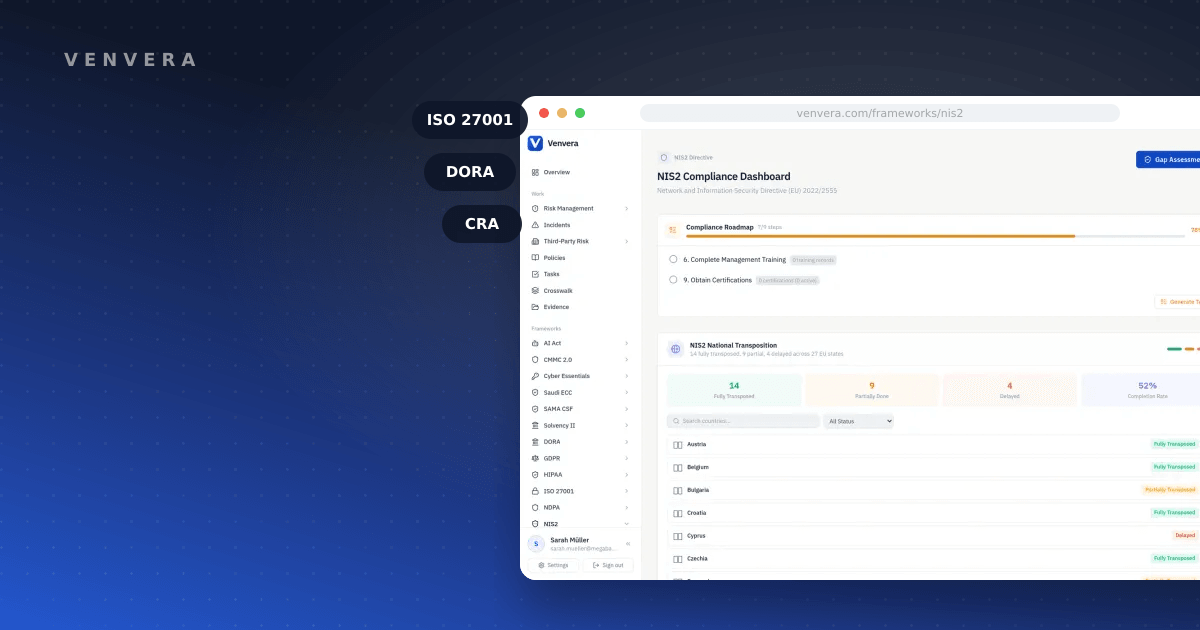
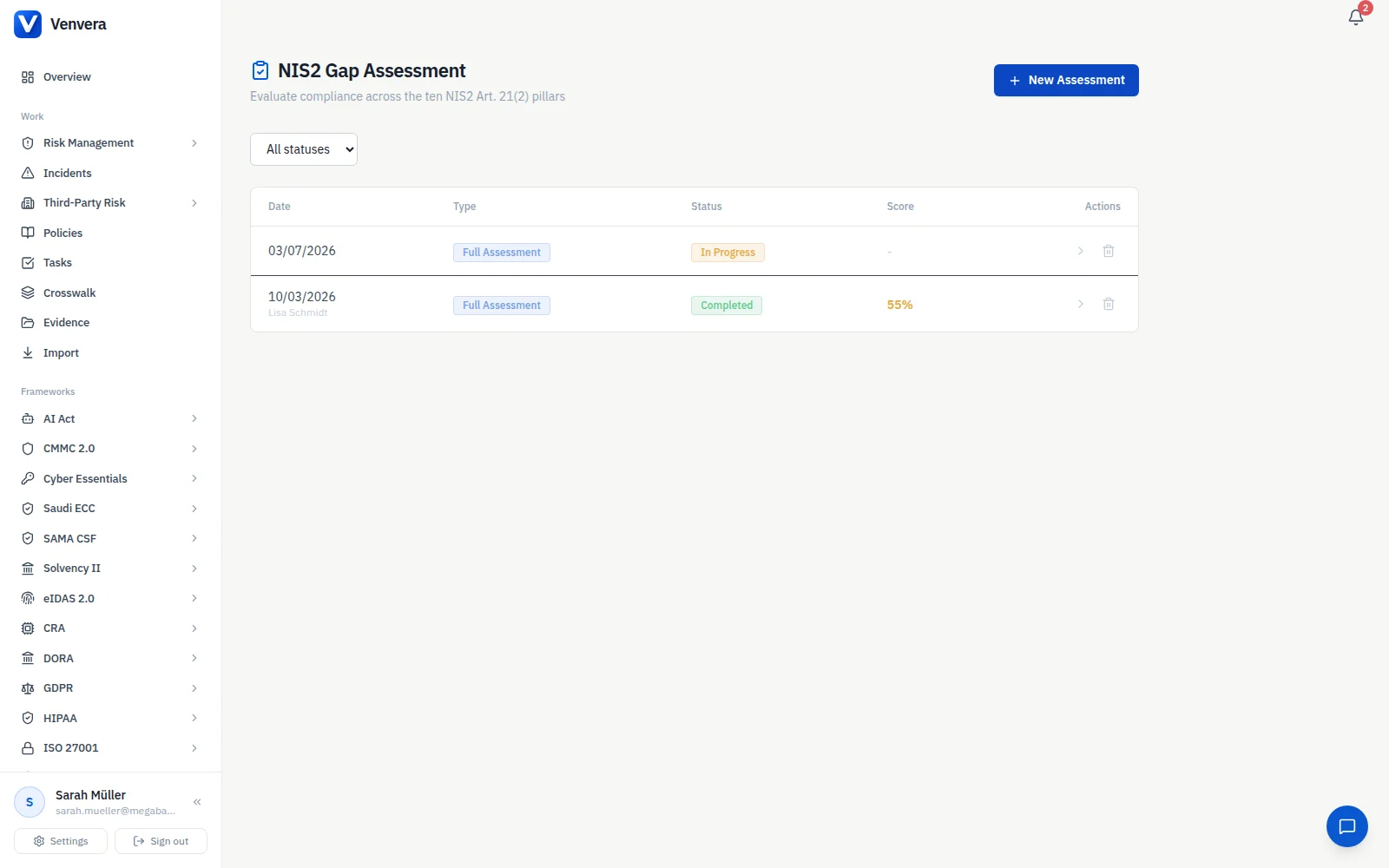
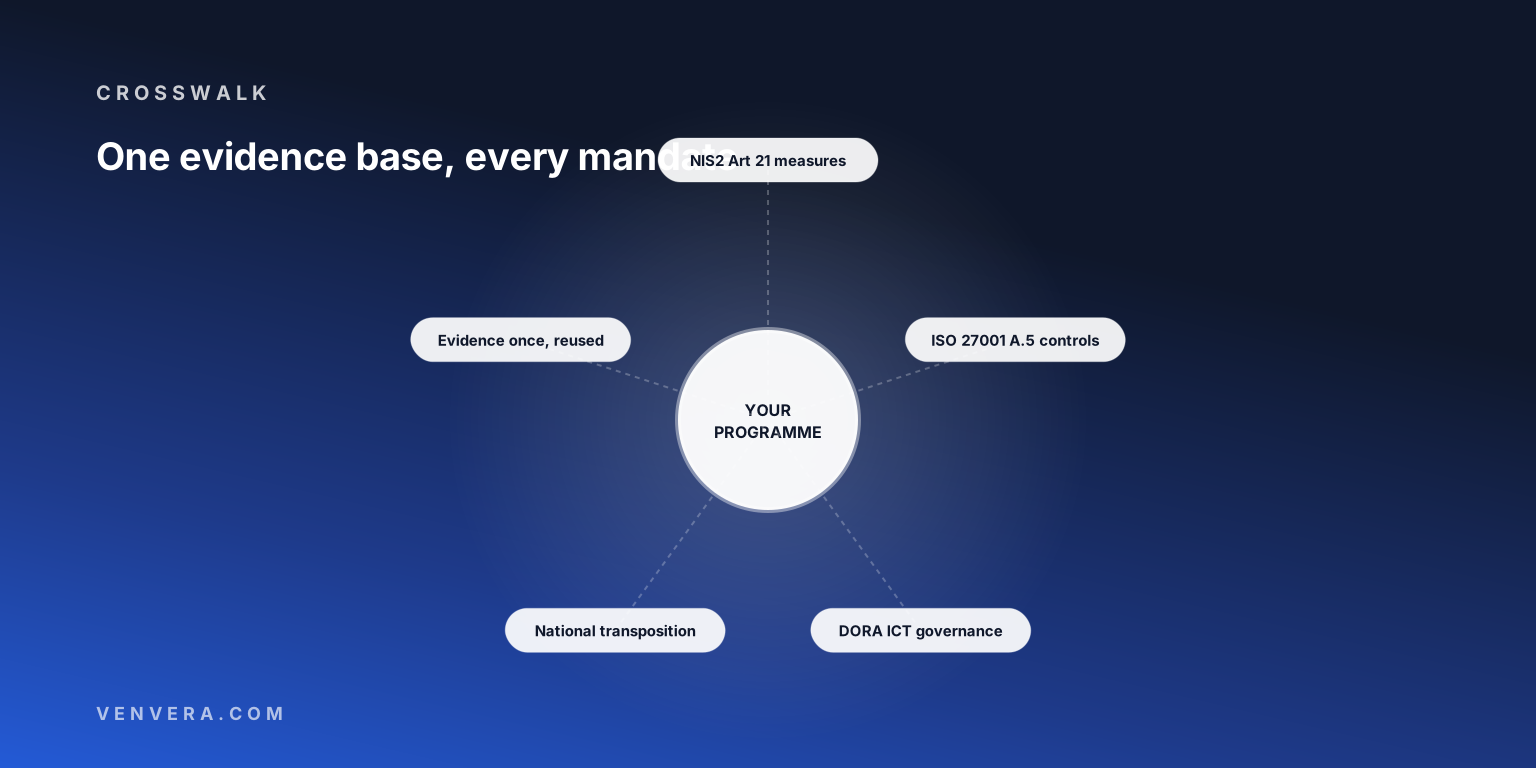
Venvera is an EU-built compliance-governance platform where NIS2 is a native module, not a mapping. Its NIS2 module is organised around the Directive itself: a gap assessment against the Article 21 measures, an owned control set, an incident workflow that runs the Article 23 24h / 72h / 1-month clock, management-training tracking for the Article 20 accountability duty, certification tracking, and NIS2 KPIs for board reporting. Because it sits inside a cross-framework crosswalk, the controls that genuinely overlap with ISO 27001 and DORA reuse the same evidence, so a financial entity already doing DORA does the shared work once.
Its honest limits, stated plainly: Venvera's integration catalogue is narrower than Vanta's 400-plus, it does not offer the same automation-first continuous-testing engine, it is a smaller and younger company, and there is no US-hosted option. If your NIS2 program is really an extension of a large ISO 27001 automation estate, those matter. If your program is a governance and reporting obligation you have to defend to a national authority, they matter much less than getting the Article 23 clock and the per-country picture right.
Vanta vs Venvera for NIS2, line by line
| NIS2 need | Vanta | Venvera |
|---|---|---|
| Article 21 controls | Pre-built, mapped from ISO 27001 | Native NIS2 control set + gap assessment |
| Article 23 reporting clock | Incident tracking; clock not a stated workflow | 24h / 72h / 1-month workflow built in |
| Management accountability (Art 20) | Policy acceptance tracking | Management-training + board-approval evidence |
| Per-country transposition | Not addressed on the NIS2 page | Country-aware scoping |
| Continuous monitoring / integrations | Strong - 400+ integrations, hourly tests | Narrower catalogue |
| Cross-framework reuse | ISO / NIST mapping | Crosswalk incl. DORA, hand-mapped |
| Hosting / pricing | US company; pricing not public | EU data residency; from EUR 399/mo published |
Vanta rows are from vanta.com (verified 20 July 2026); "not addressed" means the capability is absent from Vanta's public NIS2 page, not that it is impossible in the product. Verify before relying on any single row.
How to actually get NIS2-ready (a program you can run with either tool)
Whichever platform you choose, the work follows the same path. This is the practical version, in the order that de-risks you fastest.
- Confirm scope and role first. Establish, per legal entity and per country, whether you are essential or important, and under which national transposition. This single step changes your deadlines and your supervisor. Do not start control work until it is settled.
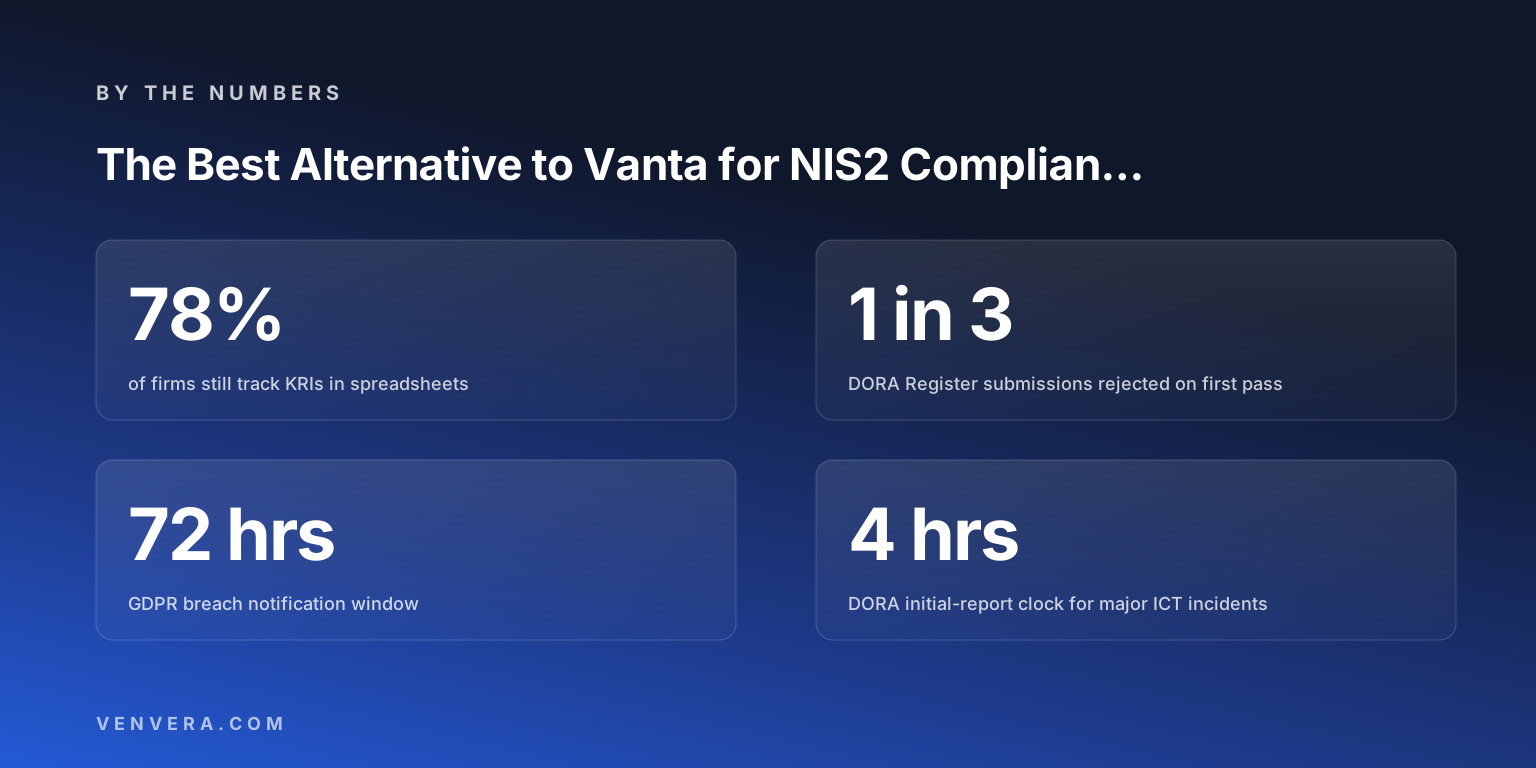
- Run a gap assessment against the ten Article 21 measures. Score current state honestly. Most organisations with an ISO 27001 base are 40 to 60% there; the gap is concentrated in incident reporting, supply chain and governance.
- Stand up the Article 23 reporting workflow before you need it. Pre-build the 24-hour early warning, the 72-hour notification and the one-month final report as owned templates routed to the right national CSIRT. The worst time to design this is at hour zero of a real incident.
- Capture the Article 20 governance evidence. Get the management body to formally approve the measures, record it, and put named people through training with a dated completion record.
- Reuse what you already hold. If you carry ISO 27001 or DORA, map the overlapping controls once and let the shared evidence satisfy both, rather than re-collecting per framework.
- Register with the national authority where required, and keep the documentation current, because NIS2 supervision is continuous, not a point-in-time audit.
Which tool fits which buyer
Choose Vanta if
You already run SOC 2 or ISO 27001 on Vanta, your estate is cloud and SaaS heavy with integrations Vanta supports, continuous automated monitoring is your priority, and NIS2 is one of several frameworks you want mapped onto existing evidence.
Choose Venvera if
NIS2 is a primary obligation you must defend to a national authority, you need the Article 23 clock and Article 20 governance handled natively, you operate in more than one Member State, you want to reuse DORA or ISO 27001 evidence through a real crosswalk, and EU data residency plus published pricing matter to you.
Still comparing more broadly? See our Vanta alternative for EU compliance overview, the DORA-specific comparison, or the wider NIS2 compliance software round-up. If you are still working out whether DORA or NIS2 applies to you, read DORA vs NIS2.
Frequently Asked Questions
Does Vanta support NIS2?
Yes. Vanta offers pre-built NIS2 controls mapped largely from ISO 27001, continuous monitoring across 400-plus integrations, and supply-chain risk automation. Its approach reuses existing ISO 27001 work rather than treating NIS2 as a standalone regime, which is efficient if you are already on Vanta but lighter on the EU-specific parts such as per-country transposition and the Article 23 reporting workflow.
What is the best Vanta alternative for NIS2?
It depends on why NIS2 is on your desk. If it is a by-product of SOC 2 or ISO work, Vanta itself may be enough. If NIS2 is the primary obligation and you need native controls, the Article 23 clock, management-body accountability and per-country scoping, an EU-native governance platform such as Venvera is a closer fit. Evaluate any alternative on those four points specifically.
What are the NIS2 reporting deadlines?
For a significant incident, Article 23 requires an early warning within 24 hours of becoming aware, an incident notification within 72 hours, and a final report within one month, filed to your national CSIRT or competent authority. An intermediate report can be requested in between.
Is NIS2 the same in every EU country?
No. NIS2 is a Directive, so each of the 27 Member States transposes it into national law with its own authority, registration portal and deadlines. The core obligations are common, but where and how you register and report is national. A multinational effectively runs NIS2 per country.
We already have ISO 27001. How much of NIS2 is done?
Roughly 40 to 60% of the control substance, depending on your programme. ISO 27001 covers much of the Article 21 measures, but NIS2 adds the incident-reporting clock, management-body accountability and training, supply-chain specifics and national registration that ISO does not. A crosswalk lets you reuse the overlap and focus effort on the genuinely new parts.
Do I need dedicated NIS2 software or is a consultant enough?
A consultant can scope you and design the programme, but NIS2 is a continuous obligation with a live reporting clock and evidence that must stay current between supervisory contacts. Software is what keeps the controls owned, the Article 23 workflow ready, and the governance evidence fresh. Most organisations use both: a consultant to set direction, software to operate it.
Primary sources
- Directive (EU) 2022/2555 (NIS2) - the governing text, including Article 20 (governance), Article 21 (risk-management measures) and Article 23 (reporting obligations). EUR-Lex.
- ENISA - NIS2 Directive - implementation guidance and the essential/important entity framework. enisa.europa.eu.
- Vanta - NIS2 product page - capabilities quoted above, verified 20 July 2026. vanta.com.
Method note. Vanta capabilities are drawn from vanta.com and classified vendor-stated unless independently confirmed; Venvera capabilities are verified against the product. Both platforms change quickly, so re-verify the specific capability that matters to your decision before you commit. NIS2 national transposition varies by Member State; confirm your national law and authority.
Run NIS2 as the regulation, not a mapping.
Venvera handles NIS2 natively: a gap assessment against the ten Article 21 measures, the Article 23 24h / 72h / 1-month clock as a live workflow, management-body accountability and training, per-country scoping, and a crosswalk that reuses your ISO 27001 and DORA evidence. Flat pricing from EUR 399/month, EU data residency. See the NIS2 module.
By Alexander Sverdlov, CEO and Founder, Venvera. Published 20 July 2026 - Last reviewed 20 July 2026.